I spent the weekend up near Sparta, North Carolina.
When I pulled into the campground the sky split open. Rain hammered down for hours, like the land itself wanted to test us before letting us in.
Our host was an avid fly angler in his early 30s who’d grown up fishing these creeks since he was 12. He’d gathered a group of men from across the East Coast, each with their own story and philosophy of outdoorsmanship and conservation. One man swore by tradition, wading in vintage gear, bird hunting with side by sides, and planning to hunt deer this season with a wheel lock rifle.
That first night, we sought shelter in the tower of a children’s playset, swapping stories over gas station pizza while the rain kept falling. There’s something about those moments, grown men huddled together, laughing through the storm, that stays with you for the rest of your life.
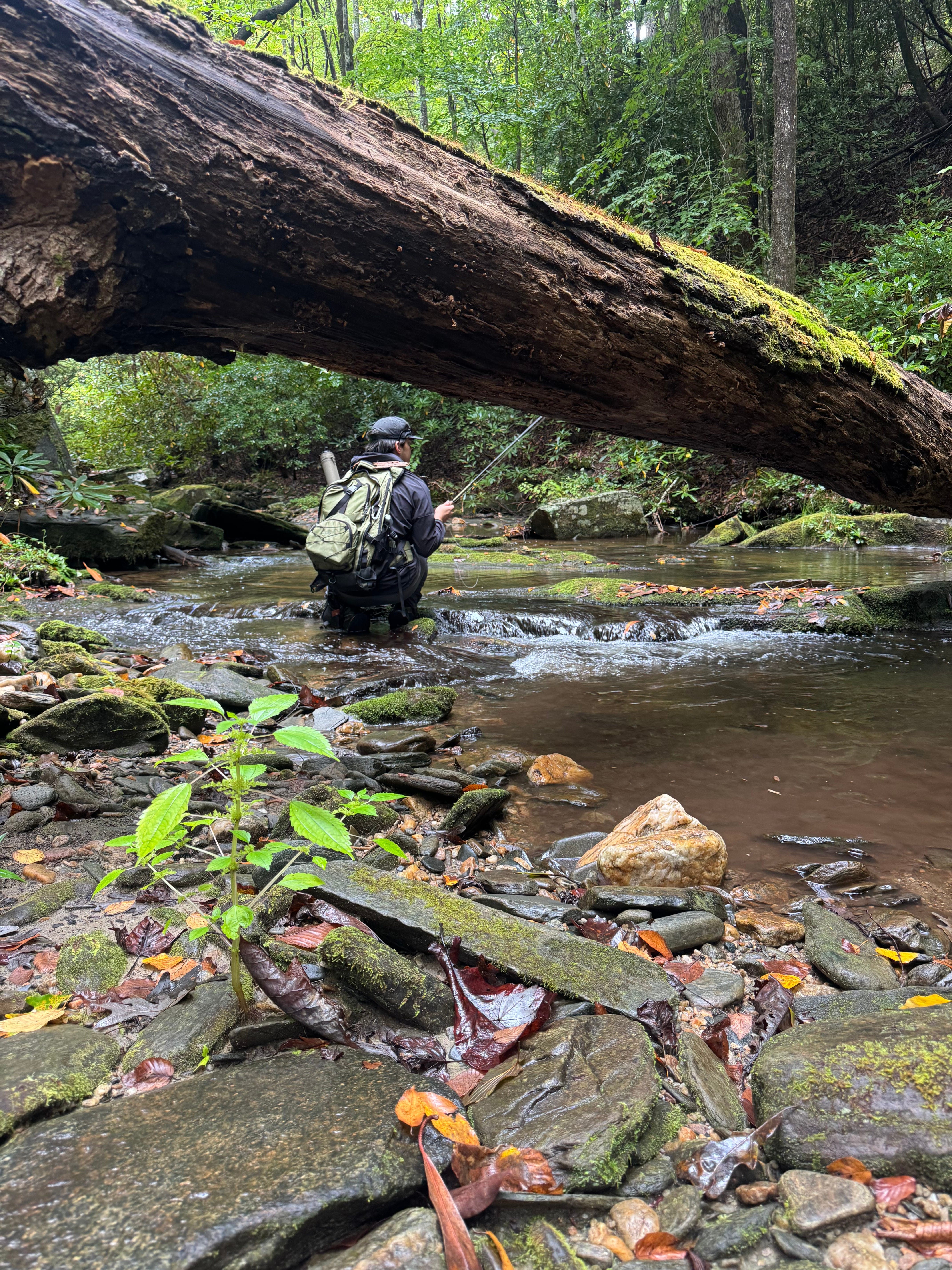
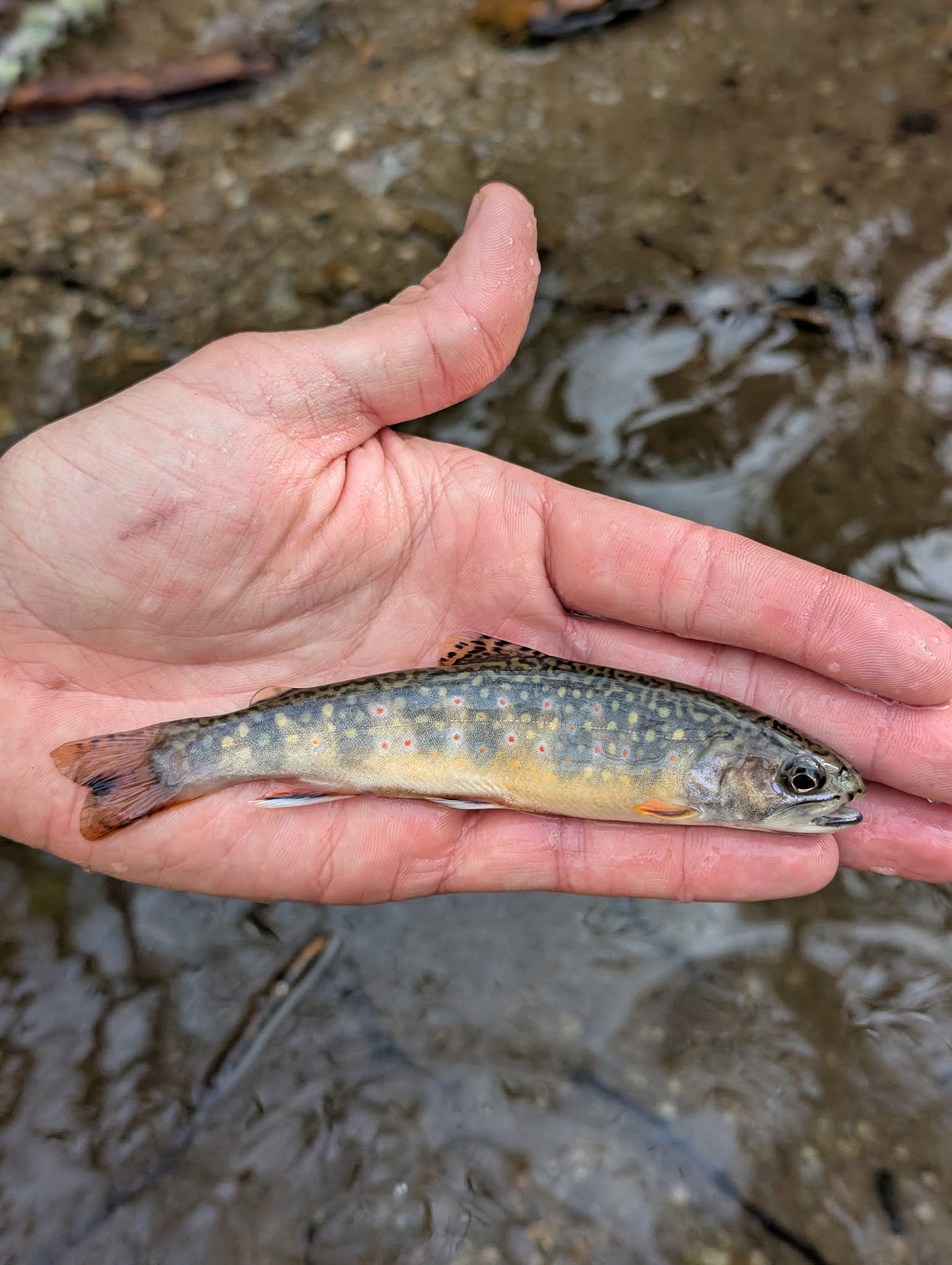
The next morning we split into groups of three and fanned out across tight, rhododendron choked creeks. My group only pulled in five brook trout, but the fishing wasn’t the real prize. It was seeing these native fish in their fragile waters, knowing what’s stacked against them.
Later, we gathered at a vineyard for a presentation from restoration specialists and a trout biologist with North Carolina Parks and Wildlife. What I learned shook me.
Brook trout are North Carolina’s only native trout. They’re small, tough, and brilliantly colored. But their survival’s fragile because of us.
• Road culverts: When a culvert’s too steep or set too high, trout can’t pass through. That traps one population on one side and another on the other. Over time, their genetics collapse. Without fresh DNA, fish get weaker, less able to fight disease or adapt.
• Industrial farming: Topsoil stripped. Watersheds gutted. Without trees and soil to buffer the rain, water rushes downstream too fast, flooding during storms, drying in summer. Fish eggs suffocate. Cold, clean flows vanish. Whole populations die.
• Moving fish: Stocking and transporting them might look helpful, but it spreads disease, increases competition, and erases the unique genetics that evolved in each watershed over thousands of years.
Even after Hurricane Helene, FEMA allowed many to bypass the usual permitting process to restore roads quickly. Little thought was given to how those decisions would affect local flora and fauna. Who’s to say if it’s right or wrong. Nothing in life is black and white. But the truth is, it happens all the time. Short term fixes, little regard for the long term impact on plants and animals that were here long before we ever decided to make these places our homes.
One story I heard sticks with me. An industrial farm razed every tree along a riverbank, wiping out the buffer. Runoff poured in. The entire brook trout population of that stream was destroyed. Gone. One short sighted decision erased generations of fish.
It reminded me of how loggers in the 1800s used rivers as highways, choking them with timber and wiping out trout runs. We’ve been here before. And we keep repeating the same mistakes, over and over again.
The truth is, it’s not enough to say you support conservation. You’ve got to act. Donate money. Volunteer. Educate yourself. Pass on your knowledge. And manage resources personally. If you keep shooting spikes and young bucks, don’t complain that your deer never get big. If you dump chemicals into the watershed, don’t be surprised when your kids never see a native trout.
When I first moved to North Carolina, an old man showed me a barn wall lined with deer skulls. Almost all were under six points. He said the deer just didn’t grow large around there. Well, no kidding buddy.
Our actions matter. What we take or protect shapes the world our children will inherit.
Because if we don’t, those chasing profit will take it all.
The rain that weekend eventually passed, but the message it left behind didn’t. We can’t wait for someone else to save these waters. It has to be us.
FIELD
When you step into a creek, don’t just think about casting. Look around. Notice how the water moves, where it slows, where it plunges, and where it braids. Brook trout thrive in cold, shaded currents with deep pools and oxygen rich riffles. If a stretch looks warm, shallow, or silted, skip it.
Wading through fragile water can crush eggs, stir up sediment, and ruin habitat. Pick your steps carefully. Fish upstream to avoid spooking trout with your silt trail. And never move fish from one drainage to another, no matter how harmless it seems.
Conservation starts with awareness. When you learn to read the water, you’ll catch more fish.
Short Term Fix vs. Long Term Stewardship
When you’re faced with a choice, ask yourself one question: Am I choosing what’s easiest right now, or what’s right for the long run?
• Short term fixes are everywhere. Cutting corners on habitat, filling tags with young bucks, or stocking fish in the wrong water. It feels productive in the moment but it costs future generations.
• Long term stewardship takes patience. It means passing on the small buck, not filling your limit every hunt, and spending time volunteering for conservation. It doesn’t give instant reward, but it compounds over time.
The true meaning of life is to plant trees under whose shade you do not expect to sit.
— Nelson Henderson
When you step into the woods or a stream, are you taking more than you give back?